 Siddharth Saoji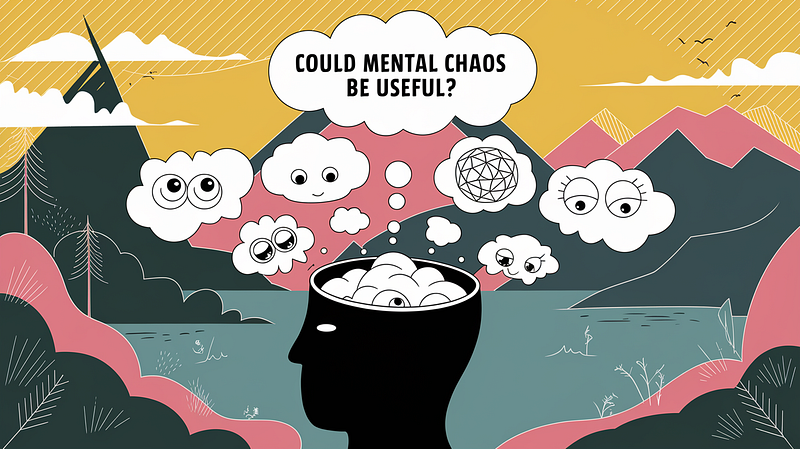
Last night, as I lay in bed, unable to sleep, a peculiar idea struck me. What if, instead of fighting my restless mind, I embraced it? This thought led me to explore what I now call “meditation inversion.”
You see, conventional thinking of meditation asks us to focus on a single point — our breath, a mantra, or a visual image. But what if we flipped this concept on its head? What if we allowed our thoughts to run wild, giving our monkey mind free rein to bounce from idea to idea?
Some context. I had gone to bed earlier than usual and found myself wide awake at 3 AM. Rather than tossing and turning, trying to force sleep, I sat up and let my mind wander. For an hour and a half, I allowed my thoughts to cascade freely, touching on recent events, conversations, and tasks yet to be done.
To my surprise, when I finally drifted back to sleep, something unexpected happened. My health sensor, a Whoop device I wear to track my sleep patterns, showed that I had actually recovered well despite the interruption. Even more intriguingly, I experienced more REM sleep after this period of intense mental activity.
This got me thinking about the nature of our minds and how we process information. In our modern lives, we’re constantly consuming data — from our phones, computers, and TVs. But when do we give our brains time to actually process all this information?
I began to see this “meditation inversion” as a form of mental recalibration, much like how AI models adjust their weights when presented with new data. It’s as if our brains need this time to fine-tune themselves, to sort through the residual memories and experiences we’ve accumulated.
In the past, I might have berated myself for “wasting time” during these sleepless hours. Now, I’m starting to view it differently. Perhaps this is exactly what our minds need — a chance to roam freely, to make connections, and to organize our thoughts without the constraints of focused attention.
While conventional thinking of meditation asks us to sit and do nothing, this inverted approach invites us to sit and try to do everything mentally — even if we don’t succeed. It’s a fascinating shift in perspective, one that has me excited to explore further.
As I reflect on this experience, I can’t help but wonder: Could this be a key to better mental processing? A way to give our overloaded brains the space they need to catch up with our fast-paced lives? It’s just one experience, of course, but it’s opened up a world of possibilities in my mind. Who knows what other insights might come from embracing, rather than resisting, our wandering thoughts?