 Siddharth Saoji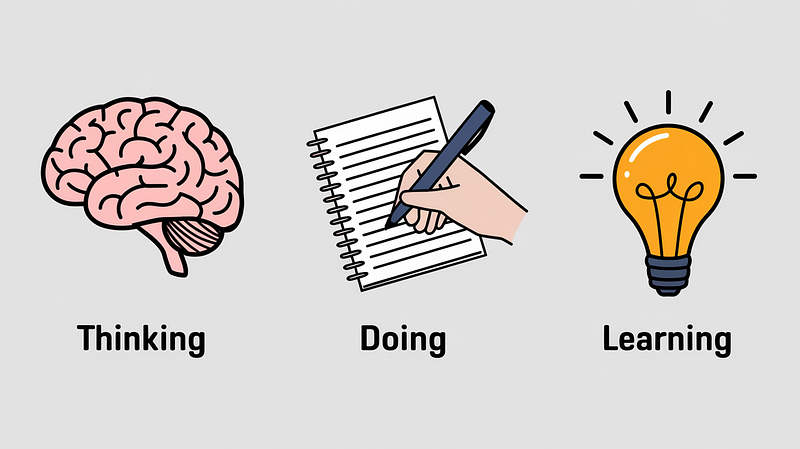
Me: I split my day into 3 sections: Thinking, Doing, and Learning. Thinking is about exploring topics, usually related to building narratives and finding meaningful questions. Doing includes writing documents, coding, and meeting people. Learning involves watching educational videos or tutorials, and reading books.
You: Hold on, why separate these actions? Aren’t we thinking when we’re writing or reading?
Me: Yes, we are, but when we combine activities, we’re sharing mental space. In my experience, this often leads to missing edge cases because both actions (like Doing-Thinking or Learning-Thinking) try to guide each other, potentially overfitting the situation. Note that jotting down thoughts while in the Thinking phase is fine — it’s just to assist the thought process, not to achieve a specific goal.
You: What’s the purpose of this approach?
Me: It helps focus on specific actions, increases work speed and productivity, and allocates dedicated time for deep thinking, which is especially beneficial if you stick to it for 30 minutes or more.
You: How do you arrange these activities throughout the day?
Me: I usually start with Doing to feel accomplished early on. Then I move to Thinking, which works best for me when I’m most focused. After that, I return to Doing, and allocate the later part of the day (around 4–7 PM) for Learning. This timing works for me because my mind has absorbed a lot throughout the day and needs a structured task to avoid scattered thinking.
You: Is there any free time between these activities?
Me: Absolutely, and it’s crucial. Free time allows your mind to adjust, change, and explore ideas you’re not deliberately focusing on. It’s essential to give your mind rest — you’re its master, after all.
You: Should we try to include all three categories every day, or is it okay to skip some?
Me: It’s definitely okay to be flexible. Holding too tightly to any system can become counterproductive or stressful. We don’t want the process to overshadow the goal of better productivity. That said, consistency does help. The more your mind practices this routine, the easier it becomes to maintain.
You: So, it’s Doing — Thinking — Learning, then?
Me: That’s right, but remember to adapt it to your needs and include breaks. The key is finding a balance that works for you while striving for improved focus and productivity.