 Siddharth Saoji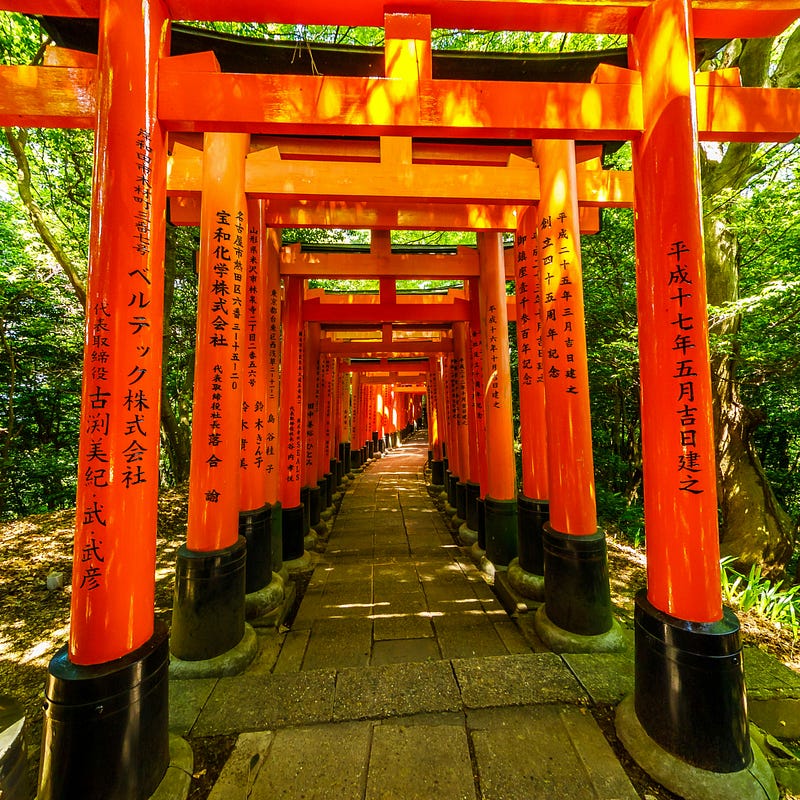
Last month, I found myself at the iconic Fushimi Inari shrine in Kyoto, Japan. You’ve probably seen it in photographs — the mesmerizing pathway of thousands of vermilion torii gates winding up a hillside like a bright orange serpent against the forest backdrop. What the pictures don’t tell you is that reaching the summit requires climbing thousands of steps in a journey that takes more than an hour.
It was December, and the winter chill bit through my jacket as I began the ascent. The path was dotted with small shrines serving as checkpoints, each offering a brief respite with vending machines and ice cream stands — a peculiar comfort in the cold weather. As I continued upward, I noticed a fascinating pattern emerging. The crowd that had started the journey together began to thin out. At each checkpoint, a few more people would turn back, their enthusiasm dampened by the relentless steps and the climbing fatigue.
I pressed on, my heavy backpack growing seemingly heavier with each step. What kept me going was the anticipation of something extraordinary at the summit — perhaps a breathtaking vista or an especially magnificent shrine that would make this arduous climb worthwhile. By the time I reached the top, I was among the mere 8–10 visitors who had persevered, and chosen to complete the full journey.
But here’s where the story takes an unexpected turn. The view from the top, while pleasant, wasn’t dramatically different from what I could see a quarter way up. The shrine at the summit mirrored those I had passed along the way. There was no hidden treasure, no special revelation waiting at the peak. At first, this felt like disappointment — I had pushed myself to the limit, only to find more of the same.
It was during my descent, as I was surprisingly sweating despite the 5-degree Celsius temperature, that the real meaning of the journey dawned on me. The truth I discovered at the top was exactly what had been present at the base of the hill — but I needed to make that climb to truly understand it. Had I not made the journey, I would have always wondered what I might have missed, what secrets the summit held.
Sometimes in life, we chase after distant goals, convinced that something spectacular awaits us at the end. But perhaps the real value lies not in what we find at the destination, but in the understanding we gain by making the journey. I had to climb Fushimi Inari’s thousands of steps not to discover something new, but to appreciate what was there all along.
The vermilion gates of Fushimi Inari taught me that sometimes, we need to complete the journey not to find something different, but to confirm what we already have. And that realization alone makes every step worthwhile.