 Siddharth Saoji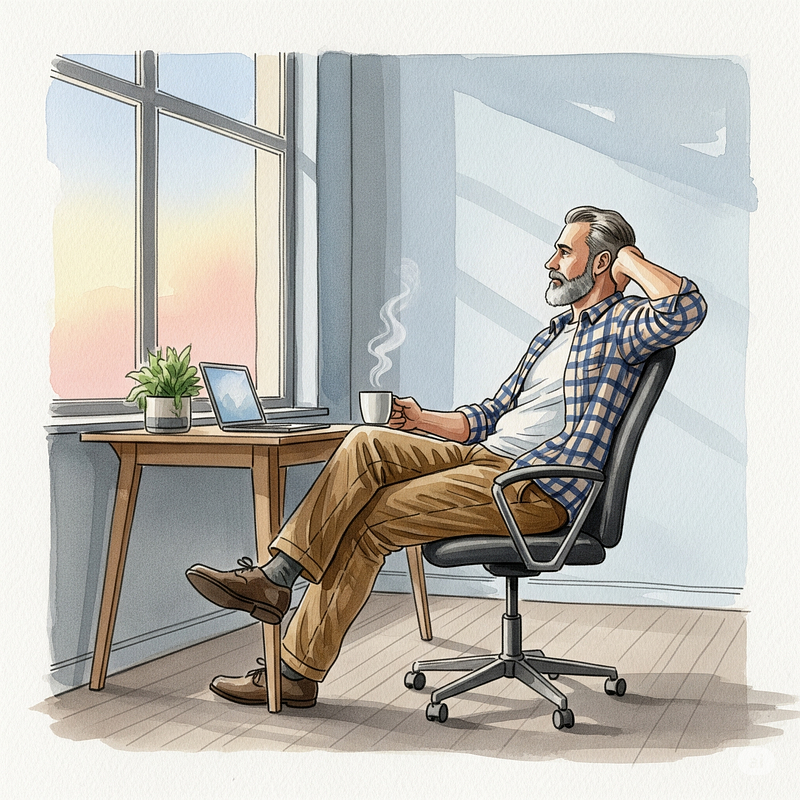
Reader: I’ve been thinking about your notes on knowledge workers and downtime. You mentioned that we need to stop feeling guilty about finishing tasks early or having idle moments. But isn’t there something inherently uncomfortable about being paid to… not work?
Writer: That discomfort is exactly the problem. We’ve internalized this factory mindset where productivity equals visible activity (manual labour). But knowledge work isn’t assembly line work. When a software engineer stares out the window for twenty minutes and then suddenly solves a complex algorithm, was that twenty minutes wasted?
Reader: I see your point, but from an employer’s perspective, how do you measure or justify paying someone who might spend half their day in what looks like downtime?
Writer: That’s the million-dollar question, isn’t it? Traditional management still operates on the assumption that time equals output. But knowledge work is fundamentally different. A copywriter might produce their best campaign idea while doing dishes at home. A product manager might have their breakthrough insight during a walk between meetings.
Reader: You also mentioned the recent AI-driven layoffs. Doesn’t this make the argument for downtime even harder to make? Companies are cutting costs everywhere.
Writer: Actually, I think it makes the argument more critical. As AI handles more routine tasks, human workers become valuable precisely for what AI can’t do — creative thinking, innovative problem-solving, strategic insight. But these cognitive processes require mental space. They require what looks like “doing nothing.”
Reader: So you’re saying that the very thing that makes us irreplaceable — our ability to think creatively — requires the one thing most workplaces discourage?
Writer: Exactly. It’s this paradox where we’re penalized for the conditions that make us most valuable. When we force knowledge workers into rigid schedules and constant visible activity, we’re essentially asking them to perform like machines while expecting human innovation.
Reader: But what about accountability? How do managers know their team is actually working if they’re not seeing tangible output during those thinking periods?
Writer: This is where we need to shift from measuring hours to measuring outcomes. Judge the quality of the final product, not the process that created it. Some of the most productive knowledge workers I know have irregular rhythms — intense periods of output followed by what looks like inactivity but is actually processing time.
Reader: You mentioned doing chores or unrelated tasks as potentially productive. That seems like a hard sell to most bosses.
Writer: Think about it this way — when you’re stuck on a problem and take a shower, where do your best ideas come? The brain needs these moments of reduced cognitive load to make connections. Whether it’s folding laundry or taking a walk, these activities can clear mental space for insights to emerge.
Reader: So what’s the practical solution here? How do we bridge this gap between what knowledge workers need and what employers expect?
Writer: It starts with education and shifting expectations on both sides. Employers need to understand that downtime isn’t downtime for knowledge workers — it’s often when the most valuable work happens in the background. And workers need to stop feeling guilty about needing this space and start advocating for work arrangements that support their actual cognitive needs.
Reader: Speaking of environments, I’ve noticed many tech companies installing sleeping pods, game rooms, and other amenities. Are these attempts to address what you’re talking about?
Writer: They’re a step in the right direction, but here’s the thing — the amenities themselves don’t matter if the culture doesn’t support using them. I’ve seen companies spend thousands on a ping pong table that sits empty because middle management sends subtle signals that using it makes you look unproductive.
Reader: So it’s not enough to just provide the spaces?
Writer: Yes. It creates this false promise of supporting work-life balance while actually reinforcing the exact mindset we need to change.
Reader: So what would proper implementation look like?
Writer: Leadership — especially middle management — needs to model and actively encourage using these spaces during regular work hours. When a manager suggests someone take a break to play foosball because they’ve been stuck on a problem, that’s when these amenities serve their actual purpose. It’s about cultural permission, not just physical infrastructure.
Reader: I can already hear the pushback from managers: “If we give people this kind of flexibility, won’t some employees just abuse it? Won’t we end up with people who game the system?”
Writer: That’s always the fear, isn’t it? And honestly, yes — some people will take advantage. There will always be individuals who see flexible downtime as an opportunity to slack off rather than recharge for better performance.
Reader: So how do you address that concern? It seems like it could undermine the whole approach.
Writer: Here’s the thing — you’re going to have people who exploit any system, whether it’s rigid or flexible. But when you look at the bigger picture, the benefits of flexibility far outweigh the costs of a few bad actors.
Reader: But what about the people who do abuse it?
Writer: They become obvious pretty quickly in a results-focused environment. If someone’s output consistently suffers, that’s a performance issue regardless of how they spend their time. The beauty of measuring outcomes rather than hours is that it makes both high performers and low performers more visible.
Reader: So it’s almost like the flexibility acts as a screening mechanism?
Writer: In a way, yes. Companies that get this right end up with teams full of people who don’t need to be micromanaged, who take initiative, and who understand that downtime serves productivity rather than replacing it. Meanwhile, organizations that cling to rigid oversight often struggle to attract or retain their best knowledge workers.
Reader: This feels like a fundamental shift in how we think about work itself.
Writer: It is. We’re still operating with Industrial Revolution assumptions about labor in a post-industrial economy. The sooner we recognize that knowledge work requires different conditions — including what looks like inactivity — the more productive and innovative our workplaces will become. The alternative is burning out our best thinkers or losing them to environments that better understand how creativity actually works.